sales@laminar.my

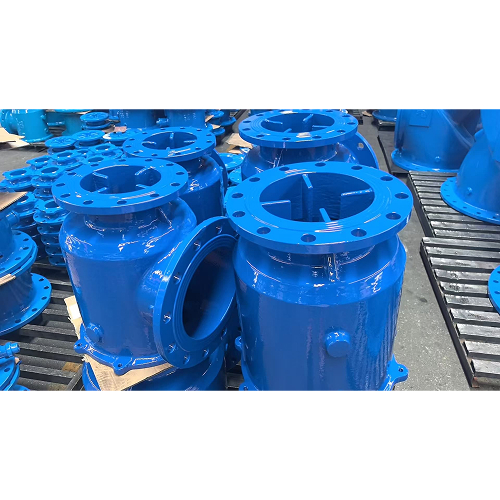
Pump Suction Guide

Benefits & Features

Reduced Installation Cost and Footprint

  • No separate in-line strainers, long-radius elbows, or superfluous piping – reducing material costs.

  • Fewer pipe connections: from five (or more) down to just two – reducing labour costs.

  • Reduced floor space requirements of up to 20% compared to traditional piping layouts.

  • Compact design simplifies pump station layout and improves access for maintenance.

Enhanced System Reliability

  • Guide vanes eliminate the need for 5 pipe diameters of straight suction pipe, stabilizing flow directly at the pump inlet.

  • Permanent stainless steel strainer with 3mm perforations protects the pump from debris.

  • Start-up fine mesh strainer (remove after 24 hours) captures initial system debris during commissioning.

  • Inlet gauge tapping (1/4″ NPT) allows monitoring of differential pressure across the strainer to alert operators when cleaning is required.

Durable Construction

  • Body: Cast iron (standard) or ductile iron (optional for higher stress applications)

  • Strainer: Stainless steel, 0.125″ (3 mm) perforations

  • Guide vanes: Cast iron or ductile iron

  • Cover plate: Ductile iron with EPDM O-ring seal

  • Corrosion protection: Min 250μ Epoxy coating RAL 5017 blue, WRAS approved

Flexible Installation

  • Can be installed in any orientation.

  • Reversible hinged cover for easy strainer access.

  • Boss cast on the fitting allows a support pipe-stool to be located under the unit, removing weight from the pump suction flange.

  • Drain connection for blow-down valve installation (optional).

Pump Suction Guide

Overview

The Laminar Suction Guide (SG) is a multi-function pump fitting engineered to streamline pump station installations. It integrates three essential components into a single, compact unit:

  • 90° Inlet Elbow – Eliminates the need for a separate long-radius elbow, reducing material and labour costs.
  • Flow-Straightening Guide Vanes – Corrects uneven flow profiles and mitigates swirl, ensuring a fully developed flow entering the pump impeller. This reduces vibration, bearing wear, and improves overall pump efficiency.
  • In-Line Strainer – Protects the pump from debris during start-up and operation. A removable fine-mesh start-up strainer is included for system clean-up during the first 24 hours of operation.

Technical Specifications

Parameter

Details

Pressure Rating

ANSI 125: 175 psig at 150°F (12 bar at 65°C) – 100 psig at 300°F (7 bar at 150°C)

Temperature Range

Up to 300°F (150°C)

Size Range

1.5″ to 20″ (DN40 to DN500)

Body Material

Cast iron / Ductile iron

Strainer Material

Stainless steel, 0.125″ (3 mm) perforations

Guide Vanes

Cast iron / Ductile iron

Cover Seal

EPDM O-ring

Coating

Min 250μ Epoxy Coating RAL 5017 blue, WRAS Approved

Inlet Gauge Tapping

1/4″ NPT (plugged)

Start-Up Strainer

Fine mesh galvanized steel (remove after 24 hours)

Applications

Industry / Application

Details

HVAC systems

Chilled water, condenser water, and heating water pumping

General purpose pumping

Water and glycol-based fluids

Industrial / Process pumping

Water, wastewater, sewage, seawater

Utilities

Pumping stations, water treatment plants

Power generation

Cooling water systems

Chemical plants

Process fluid handling

Installation & Operation

Installation

  • Mount directly onto the suction flange of horizontal or vertical centrifugal pumps.
  • Align the directional arrow on the body with system flow direction.
  • The suction guide may be installed in any position, provided the guide vanes face the pump inlet.
  • Do not use the suction guide to support the suction piping – piping must be supported independently.
  • A support boss is provided for a pipe-stool to remove weight from the pump flange.

Operation

  • No special attention required at start-up.
  • After system clean-up or a maximum of 24 running hours:
    1. Stop the pump and close isolation valves.
    2. Drain the suction guide.
    3. Remove the cover and strainer assembly.
    4. Remove the fine-mesh start-up strainer (tack-welded to the permanent strainer).
    5. Reinstall the permanent strainer and cover.

Maintenance

  • Monitor differential pressure across the fitting using the inlet gauge and pump inlet gauge to determine when strainer cleaning is required.

More Products